

Researchers at the Wertheim UF Scripps Institute have found that the amino acid glycine can send a “slow-down” signal to the brain, potentially contributing to depression and anxiety. The discovery, centered around the GPR158 receptor, could help develop faster-acting treatments for mood disorders. More research is needed to understand mGlyR receptors’ role and impact on brain cell activity.
A common amino acid, glycine, can deliver a “slow-down” signal to the brain, likely contributing to major depression, anxiety, and other mood disorders in some people, scientists at the Wertheim UF Scripps Institute for Biomedical Innovation & Technology have found.
The discovery, outlined on March 30 in the journal Science, improves understanding of the biological causes of major depression and could accelerate efforts to develop new, faster-acting medications for such hard-to-treat mood disorders, said neuroscientist Kirill Martemyanov, Ph.D., corresponding author of the study.
“Most medications for people with depression take weeks before they kick in, if they do at all. New and better options are really needed,” said Martemyanov, who chairs the neuroscience department at the institute in Jupiter.
Major depression is among the world’s most urgent health needs. Its numbers have surged in recent years, especially among young adults. As depression’s disability, suicide numbers, and medical expenses have climbed, a study by the U.S. Centers for Disease Control and Prevention (CDC) in 2021 put its economic burden at $326 billion annually in the United States.
Martemyanov said he and his team of students and postdoctoral researchers have spent many years working toward this discovery. They didn’t set out to find a cause, much less a possible treatment route for depression. Instead, they asked a basic question: How do sensors on brain cells receive and transmit signals into the cells? Therein lay the key to understanding vision, pain, memory, behavior, and possibly much more, Martemyanov suspected.
“It’s amazing how basic science goes. Fifteen years ago we discovered a binding partner for proteins we were interested in, which led us to this new receptor,” Martemyanov said. “We’ve been unspooling this for all this time.”
The Role of GPR158 in Stress and Depression
In 2018 the Martemyanov team found the new receptor was involved in stress-induced depression. If mice lacked the gene for the receptor, called GPR158, they proved surprisingly resilient to chronic stress.
That offered strong evidence that GPR158 could be a therapeutic target, he said. But what sent the signal?
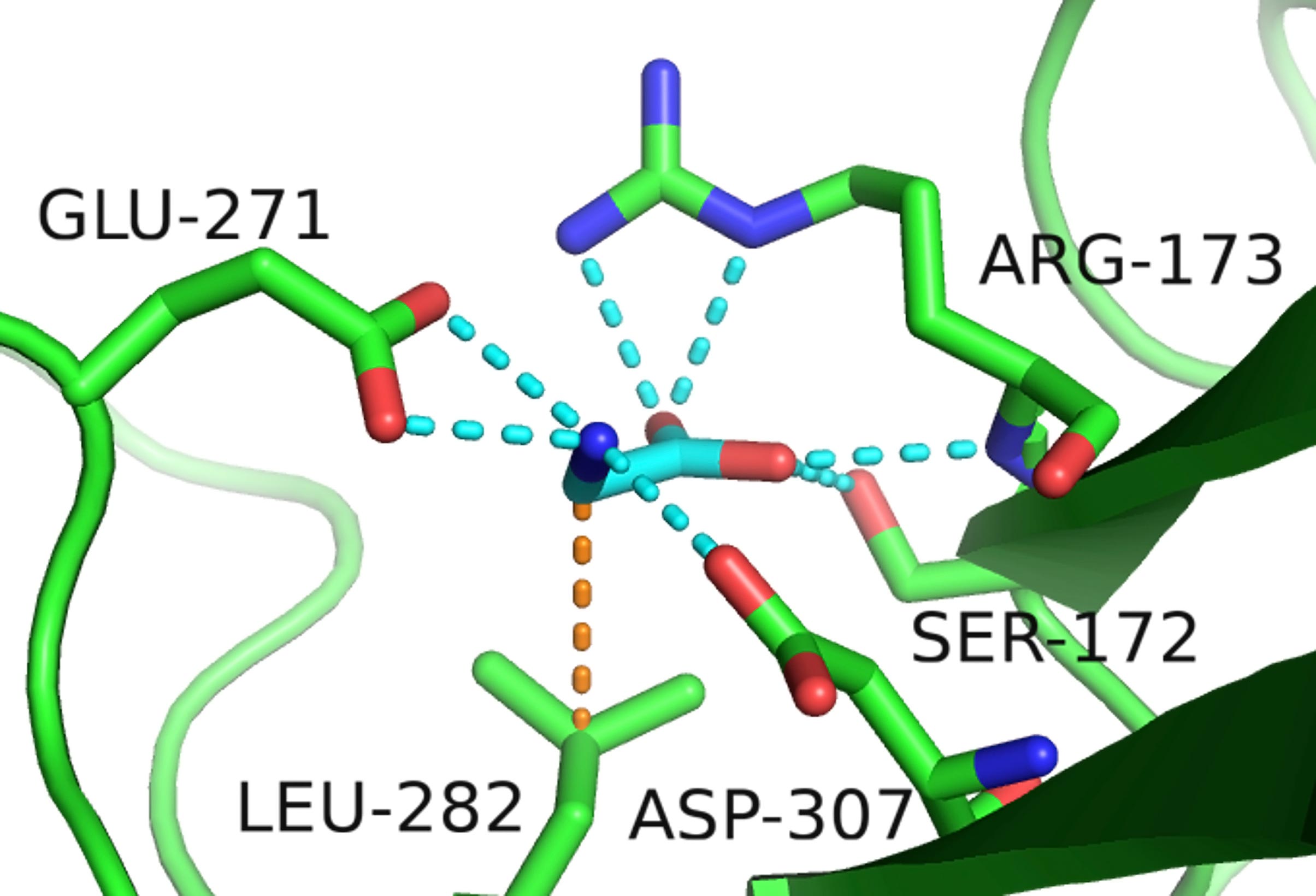
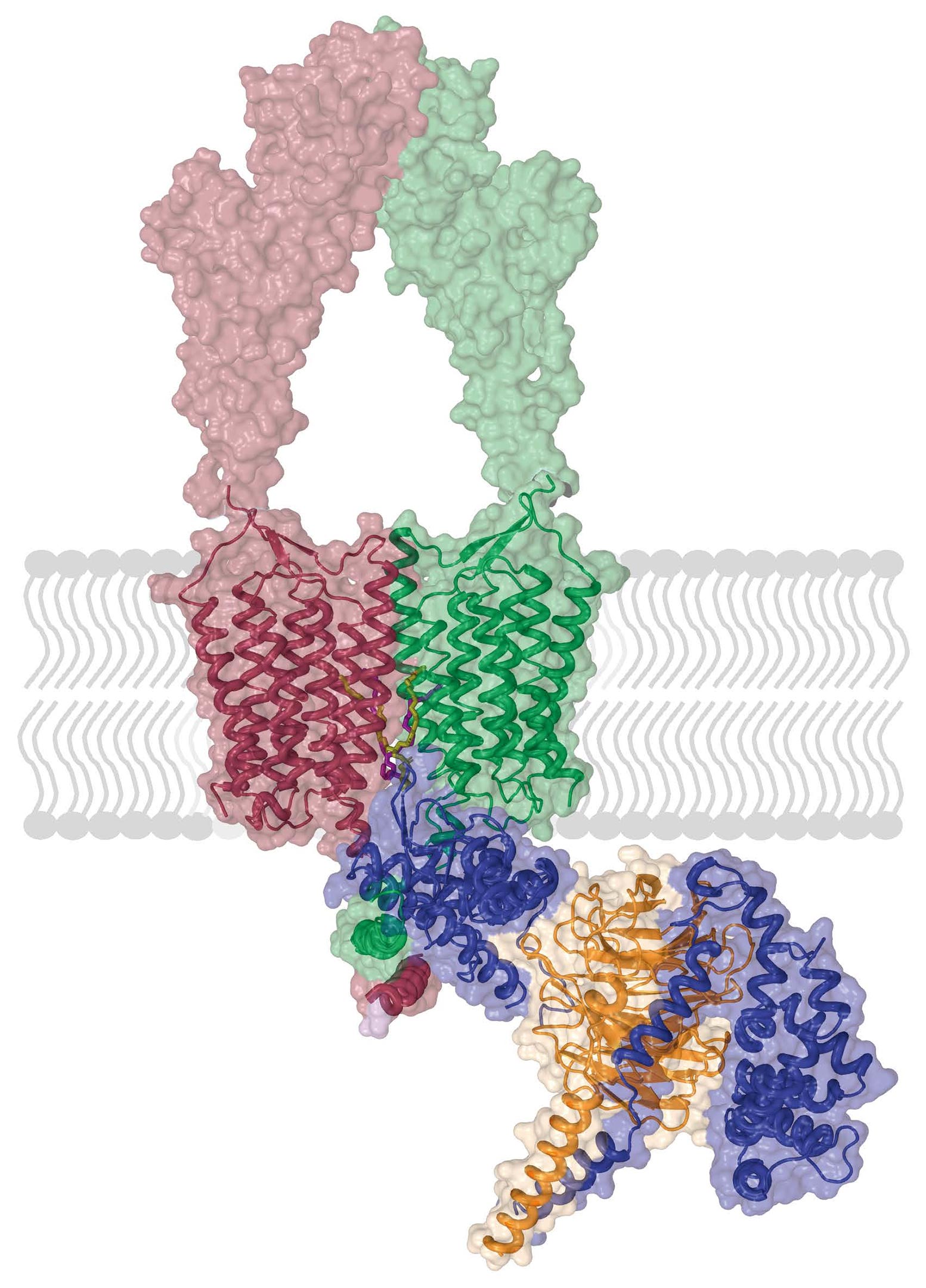
A breakthrough came in 2021, when his team solved the structure of GPR158. What they saw surprised them. The GPR158 receptor looked like a microscopic clamp with a compartment — akin to something they had seen in bacteria, not human cells.
“We were barking up the completely wrong tree before we saw the structure,” Martemyanov said. “We said, ‘Wow, that’s an amino acid receptor. There are only 20, so we screened them right away and only one fit perfectly. That was it. It was glycine.”
That wasn’t the only odd thing. The signaling molecule was not an activator in the cells, but an inhibitor. The business end of GPR158 connected to a partnering molecule that hit the brakes rather than the accelerator when bound to glycine.

“Usually receptors like GPR158, known as G protein Coupled Receptors, bind G proteins. This receptor was binding an RGS protein, which is a protein that has the opposite effect of activation,” said Thibaut Laboute, Ph.D., a postdoctoral researcher from Martemyanov’s group and first author of the study.
From Orphan Receptor to Drug Target: The Birth of mGlyR
Scientists have been cataloging the role of cell receptors and their signaling partners for decades. Those that still don’t have known signalers, such as GPR158, have been dubbed “orphan receptors.”
The finding means that GPR158 is no longer an orphan receptor, Laboute said. Instead, the team renamed it mGlyR, short for “metabotropic glycine receptor.”
“An orphan receptor is a challenge. You want to figure out how it works,” Laboute said. “What makes me really excited about this discovery is that it may be important for people’s lives. That’s what gets me up in the morning.”
Laboute and Martemyanov are listed as inventors on a patent application describing methods to study GPR158 activity. Martemyanov is a cofounder of Blueshield Therapeutics, a startup company pursuing GPR158 as a drug target.
Glycine itself is sold as a nutritional supplement billed as improving mood. It is a basic building block of proteins and affects many different cell types, sometimes in complex ways. In some cells, it sends slow-down signals, while in other cell types, it sends excitatory signals. Some studies have linked glycine to the growth of invasive prostate cancer.
More research is needed to understand how the body maintains the right balance of mGlyR receptors and how brain cell activity is affected, he said. He intends to keep at it.
“We are in desperate need of new depression treatments,” Martemyanov said. “If we can target this with something specific, it makes sense that it could help. We are working on it now.”
Reference: “Orphan receptor GPR158 serves as a metabotropic glycine receptor: mGlyR” by Thibaut Laboute, Stefano Zucca, Matthew Holcomb, Dipak N. Patil, Chris Garza, Brittany A. Wheatley, Raktim N. Roy, Stefano Forli and Kirill A. Martemyanov, 30 March 2023, Science.
DOI: 10.1126/science.add7150
The research was supported by the National Institute of Health’s National Institute of Mental Health (MH105482) and National Institute of General Medical Sciences (GM069832).
Never miss a breakthrough: Join the SciTechDaily newsletter.
Follow us on Google and Google News.
2 Comments
Multiple, and perhaps myriad causes (or combinations of causes) for “depression” leave some anxiety that “cure” will ever be found, but this is good news for those who have tried about everything to relieve the symptoms!
Surprised that research is not looking at the trace chemicals that are in food water as precursor to mood altering affects ?